Reaching rural audiences used to mean choosing between traditional media and digital channels. That choice no longer holds. Rural India has become one of the fastest-growing digital populations in the country, and any communication strategy built only around print, radio, or in-person activation is now missing a large and increasingly influential part of the audience.
This article looks at where rural digital communication stands today and the strategies that are actually working to build engagement and trust in this market.
Rural India’s Digital Shift, Current Picture
The pace of change here has been significant. Rural users now make up more than half of India’s active internet base, a shift from a market that was still catching up to urban adoption just a few years ago. Growth has been concentrated in specific behaviors: video consumption, social media use, and digital payments have all seen faster rural adoption than urban adoption in recent reporting cycles.
Two things follow from this. First, rural audiences are not a secondary digital segment anymore, they are a primary one. Second, the nature of rural digital behavior, mobile-first, video-heavy, and vernacular-driven, should directly shape how communication strategy is built, rather than treating digital as an add-on to traditional rural marketing.
Core Marketing Strategies for Rural Digital Communication
A working rural digital communication strategy generally rests on three connected elements: the target audience, the message, and the medium. Getting the medium right matters as much as getting the message right, since a well-crafted message delivered through the wrong channel simply will not land.
Social Media Marketing Strategy
YouTube has become one of the more effective channels for reaching rural audiences, largely because it communicates through visuals rather than text, which works well across varying literacy levels. Facebook and Instagram serve a complementary role, allowing brands to share images and short videos while giving audiences a direct way to respond through comments and messages.
Ascent’s work with Stanley Earth is a useful example of this in practice. The content strategy built the brand’s image around reliability and service commitments, and the campaign generated strong traction on Facebook specifically from semi-urban and rural audiences, with engagement showing up clearly in likes, comments, and shares.
Mobile-First Communication and Advertising
Rural consumers are overwhelmingly mobile-first. That means advertising and communication need to be built for mobile from the start, not adapted afterward: simple navigation, local language content, layouts that work on smaller screens and slower connections, and messaging that gets to the point quickly.
Ascent’s mobile marketing work with Shriram Bioseed followed this approach directly, using a mobile-first communication and promotion strategy to address farmer concerns in a format suited to how that audience actually consumes information. A mobile-first approach also supports broader goals like brand building and audience expansion, since it meets rural consumers on the device they already use most.
Vernacular and Video as Trust Builders
Language remains one of the highest-impact factors in rural communication. Content delivered in a region’s native language consistently builds trust faster than content translated from a national campaign, because it signals that the brand understands the audience rather than simply reaching them.
Video reinforces this. It requires less reliance on literacy than text-based content and travels well through the mobile and social channels rural audiences already use. Together, vernacular language and video format address two of the biggest historical barriers in rural communication: language mismatch and literacy variation.
Where Digital Still Needs Offline Support
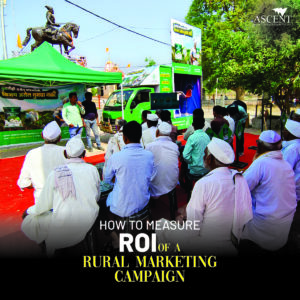
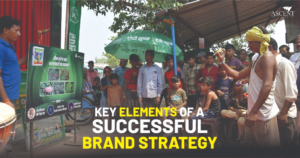
Digital growth in rural markets does not mean offline channels have become irrelevant. Infrastructure gaps, connectivity variation across regions, and the continued influence of community trust mean that digital communication performs best when it is reinforced by on-ground presence, whether that is local events, retail visibility, or community engagement. Treating digital and offline as one connected strategy, rather than separate tracks, tends to produce stronger results than relying on either channel alone.
Conclusion
Businesses and rural marketing companies that invest time in understanding how their audience actually consumes information, and where they are in their digital adoption journey, are better positioned to build communication strategies that genuinely land. As rural digital behavior continues to shift, the strategies that work will be the ones built around mobile-first, vernacular, video-led communication, supported by a continued on-ground presence where infrastructure requires it.
FAQ Section
How digitally connected is rural India right now?
Rural users now account for more than half of India’s active internet base, with growth concentrated in video, social media, and digital payments.
What is the most effective digital channel for reaching rural audiences?
Mobile is the primary channel, since most rural internet access happens through smartphones. YouTube and Facebook are particularly effective for visual, low-literacy-friendly communication.
Does digital growth mean offline rural marketing is no longer necessary?
No. Offline channels remain important, particularly in areas with infrastructure gaps, and tend to work best when combined with digital rather than replaced by it.
Why does vernacular content matter so much in rural marketing?
Content in a region’s native language builds trust faster than translated national messaging and performs better across varying literacy levels, especially in video format.